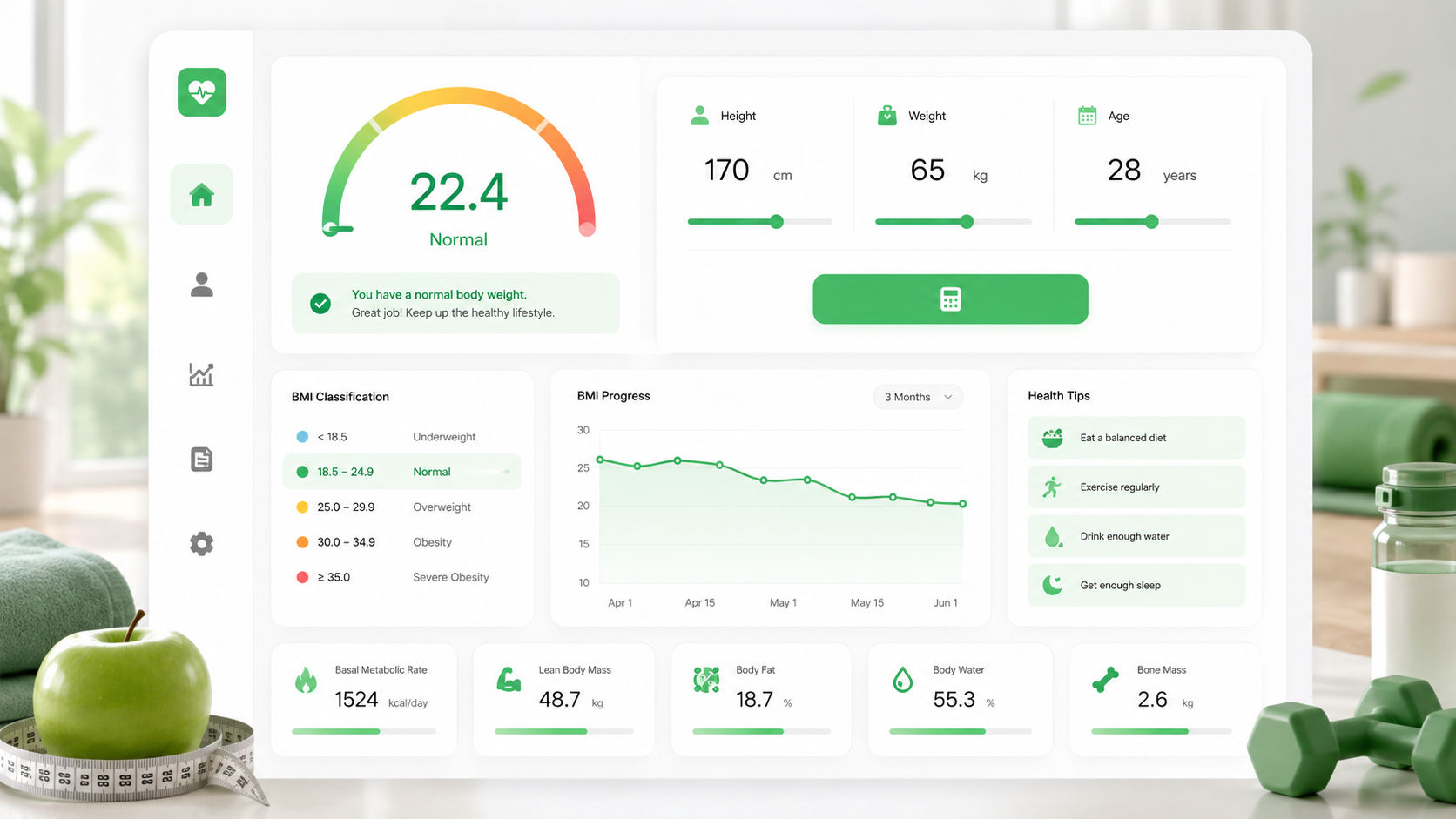
Body Mass Index (BMI) is one of the most widely used screening tools for assessing weight status and potential health risks. While it's not a perfect measure, understanding how to calculate BMI accurately and interpreting the results correctly can provide valuable insights into your overall health. This guide explains the BMI calculation process, what the numbers mean, and how to use BMI as part of a broader health assessment.
What Is BMI?
Body Mass Index is a simple calculation using a person's height and weight. The formula was developed in the 19th century by Belgian mathematician Adolphe Quetelet and has been used as a screening tool for weight categories that may lead to health problems. BMI provides a reasonable estimate of body fat for most people and is used by healthcare professionals, insurance companies, and researchers worldwide.
BMI is calculated by dividing a person's weight in kilograms by their height in meters squared. The resulting number places individuals into categories: underweight (below 18.5), normal weight (18.5-24.9), overweight (25-29.9), and obese (30 and above). These categories help assess potential health risks associated with weight.
The BMI Formula
The standard BMI formula is: BMI = weight (kg) / [height (m)]². For example, a person who weighs 70 kilograms and is 1.75 meters tall would have a BMI of 22.9 (70 / (1.75 × 1.75) = 22.9), which falls within the normal weight category.
For those using imperial units (pounds and inches), the formula is: BMI = [weight (lbs) / height (in)²] × 703. This conversion factor of 703 adjusts for the difference between metric and imperial measurements. A person weighing 154 pounds at 69 inches tall would have a BMI of 22.8.
Using a BMI calculator eliminates manual calculation errors and provides instant results. Our BMI calculator supports both metric and imperial units, making it easy to calculate your BMI regardless of which measurement system you use.
BMI Categories Explained
The underweight category (BMI below 18.5) may indicate malnutrition, eating disorders, or other health issues. Being underweight can weaken the immune system, cause bone loss, lead to fertility problems, and increase the risk of complications from surgery. If you're underweight, consult a healthcare provider to determine the cause and appropriate interventions.
The normal weight category (BMI 18.5-24.9) is associated with the lowest risk of weight-related health problems for most adults. People in this category generally have a lower risk of developing chronic conditions like type 2 diabetes, heart disease, and certain cancers. Maintaining a BMI within this range through balanced nutrition and regular physical activity is recommended for optimal health.
The overweight category (BMI 25-29.9) increases the risk of developing chronic conditions. Excess weight puts additional strain on the heart, joints, and other body systems. Lifestyle modifications including diet and exercise can help reduce BMI and associated health risks. Even modest weight loss (5-10% of body weight) can significantly improve health markers.
The obese category (BMI 30 and above) significantly increases the risk of serious health problems. Obesity is associated with type 2 diabetes, high blood pressure, heart disease, stroke, certain cancers, sleep apnea, osteoarthritis, and liver disease. Medical intervention combined with lifestyle changes is often recommended to achieve sustainable weight loss.
Limitations of BMI
BMI doesn't distinguish between muscle and fat. Athletes and bodybuilders may have high BMIs due to muscle mass rather than excess fat. A professional athlete with significant muscle mass might have a BMI in the obese category despite having very low body fat. For these individuals, BMI is not an accurate indicator of health.
BMI also doesn't account for fat distribution. Abdominal fat (visceral fat) carries greater health risks than fat stored in other areas like hips and thighs. Two people with the same BMI can have very different health risks based on where their body stores fat. Waist circumference measurements can provide additional information about fat distribution.
For older adults, BMI may not be as accurate because muscle mass naturally decreases with age while body fat may increase. This can lead to a normal BMI despite having excess body fat. Conversely, younger people with high muscle mass might have elevated BMI without health risks.
BMI doesn't account for differences between ethnic groups. Some populations have different health risks at the same BMI. For example, Asian populations may have higher health risks at lower BMIs compared to Caucasian populations. Some countries have adjusted BMI categories to account for these differences.
When BMI Is Most Useful
BMI is most useful as a general screening tool for populations rather than individuals. At the population level, BMI correlates well with body fat percentage and health outcomes. This makes it valuable for public health research, tracking obesity trends, and developing health policies.
For individuals, BMI provides a quick assessment of weight status that can prompt further evaluation. If your BMI falls outside the normal range, it's a signal to discuss your weight and health with a healthcare provider. They can perform additional assessments like body composition analysis, waist circumference measurement, and blood tests to provide a more complete health picture.
BMI is particularly useful for tracking weight changes over time. Whether you're losing or gaining weight, monitoring BMI alongside absolute weight can help assess progress and set realistic goals. A decreasing BMI that results from healthy weight loss is generally positive, while an increasing BMI might indicate the need for lifestyle changes.
Beyond BMI: Additional Health Metrics
Waist circumference provides important information about fat distribution. Excess abdominal fat (measured as waist circumference greater than 40 inches for men or 35 inches for women) increases health risks regardless of BMI. Combining BMI with waist circumference gives a more complete picture of health risks.
Body composition analysis, available through DEXA scans, bioelectrical impedance scales, or skinfold measurements, directly measures body fat percentage. This provides more accurate information than BMI alone but requires specialized equipment and expertise.
Blood pressure, blood sugar, cholesterol levels, and other metabolic markers provide direct measures of health. These metrics, combined with BMI, give healthcare providers a comprehensive view of cardiovascular and metabolic health. A person with a normal BMI but poor blood markers might need intervention despite their healthy weight.
Physical fitness level, measured through exercise testing or simple assessments like walking speed, provides important health information independent of BMI. A fit person with a slightly elevated BMI may have better health outcomes than an unfit person with a normal BMI.
Healthy Weight Management
If your BMI indicates you're outside the normal range, focus on sustainable lifestyle changes rather than quick fixes. Gradual weight loss of 1-2 pounds per week is recommended for safe, sustainable results. This approach is more likely to lead to long-term success than rapid weight loss programs.
Balanced nutrition is the foundation of healthy weight management. Focus on whole foods including vegetables, fruits, lean proteins, whole grains, and healthy fats. Limit processed foods, sugary beverages, and excessive refined carbohydrates. Portion control and mindful eating can help manage calorie intake without feeling deprived.
Regular physical activity is essential for both weight management and overall health. Aim for at least 150 minutes of moderate-intensity aerobic activity or 75 minutes of vigorous-intensity activity per week, plus muscle-strengthening activities on two or more days per week. Find activities you enjoy to make exercise a sustainable habit.
Adequate sleep (7-9 hours per night for most adults) supports healthy weight management by regulating hormones that control hunger and fullness. Poor sleep disrupts these hormones, leading to increased appetite and cravings for unhealthy foods.
Special Considerations
Pregnant women should not use standard BMI categories. Pregnancy requires different weight guidelines, and healthcare providers use pregnancy-specific weight gain recommendations based on pre-pregnancy BMI. Never attempt to lose weight during pregnancy without medical supervision.
Children and teenagers require age- and sex-specific BMI percentiles because body fat changes with age and differs between boys and girls. Pediatric BMI calculators use growth charts to determine whether a child's BMI is healthy for their age and sex. Standard adult BMI categories don't apply to children.
Elderly individuals may have different health considerations. Some research suggests that slightly higher BMI might be protective for older adults, a phenomenon known as the "obesity paradox." Healthcare providers may interpret BMI differently for elderly patients and focus more on functional status and overall health.
Using BMI Calculators Effectively
When using a BMI calculator, ensure you're using accurate measurements. Weigh yourself on a reliable scale, preferably at the same time of day, and measure your height without shoes. Small measurement errors can significantly affect BMI calculation, especially for shorter individuals.
Track your BMI over time rather than obsessing over a single measurement. Weight naturally fluctuates daily due to hydration, food intake, and other factors. Looking at trends over weeks or months provides more meaningful information about your progress.
Use BMI as one data point among many. Consider your overall health, fitness level, energy levels, and how you feel. A healthy BMI doesn't guarantee good health, and a BMI outside the normal range doesn't necessarily mean poor health. Context matters, and a healthcare provider can help interpret your BMI in relation to your overall health picture.
Conclusion
BMI remains a valuable screening tool for assessing weight status and potential health risks. While it has limitations, understanding how to calculate BMI accurately and interpreting the results correctly provides important information about your health. Use BMI as a starting point for discussions about weight and health with healthcare providers, and combine it with other health metrics for a complete assessment. Focus on sustainable lifestyle changes that improve overall health, rather than targeting a specific BMI number. With balanced nutrition, regular physical activity, adequate sleep, and stress management, you can achieve and maintain a healthy weight regardless of what the scale or BMI calculator says.